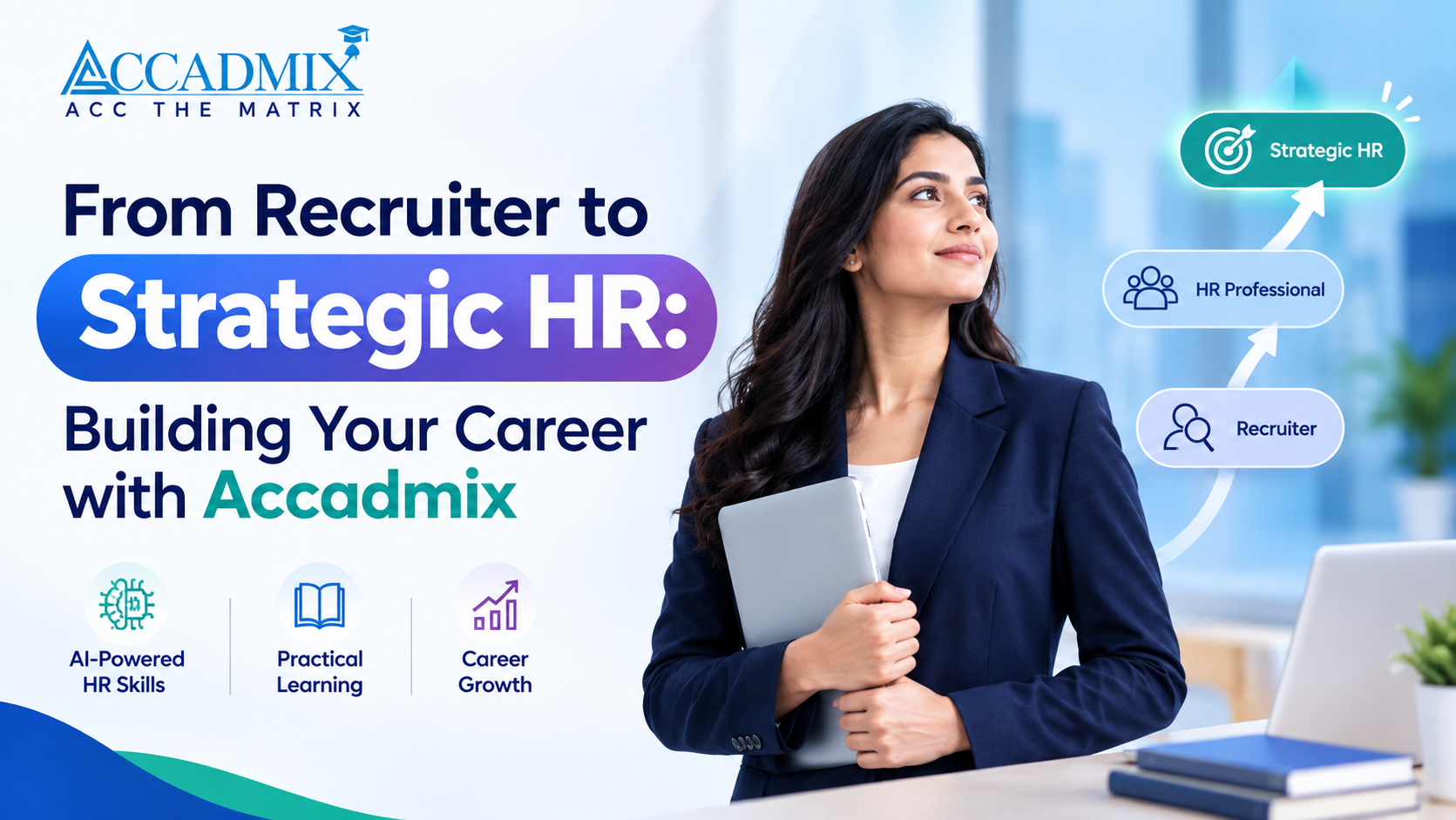
Recruitment is often the career beginning point for many HR professionals, but it is not necessarily the end of the road.
Recruiters have experience with business hire, team requirements, candidate life cycle and decision-making factors influencing the hiring process. The next step is to build on this recruitment knowledge by understanding the broader people lifecycle, workforce planning, retention strategies, people analytics and business strategy, better known as Strategic HR.
The shift from purely a recruitment role to Strategic HR is being driven by the need in business for people professionals to be more influential in not only recruitment but in all aspects of people management. Modern HR demands a strategic blend of people's business, analytics and technological skills to drive employee related decision-making in the modern workplace.
With that in mind, recruiters looking to pivot to a Strategic HR role need to build on their existing recruitment skills and learn new competencies relating to people leadership, analytics and business acumen. That is why at Accadmix we use an applied, tech-enabled approach to upskill HR professionals and help them with transition from a deliver-focused role to a strategic business partner.
Why Recruiters Are Well Positioned for Strategic HR
Recruitment provides professionals with insights into how an organisation builds its own workforce. Recruiters work closely with the hiring manager. Understand their needs, evaluate and select candidates, study the hiring trends and see the challenges and frustrations that the business faces in the process of filling vacancies.
All of these valuable experiences become a solid foundation for a strategic HR professional. The main difference lies in how a strategic HR professional applies this knowledge, which is not focused on the “how to fill this vacancy” but rather “what do we need to do with this vacancy to achieve our business goals?”
Strategic HR professionals need to be able to think beyond and become experts in areas beyond people acquisition, such as workforce planning, performance management, employee engagement, HR analytics, and technology. The recruitment experience will undoubtedly serve these professionals in their new positions, as well as provide a unique perspective on people-related problems and solutions. For the recruiters, it is an opportunity to become more than just another HR generalist and instead develop the ability to manage people analytics, technology and business strategy, which is at the core of strategic HR management
What Changes When You Move from Recruitment to Strategic HR?
Moving from recruitment into Strategic HR would, indeed, be leaving the world of talent acquisition, but it would be expanding the sphere of one’s work.
Unlike a recruiter whose activity is to find and attract the best candidate, a strategic human resource professional thinks about the bigger picture. He/she considers what the organisation needs in terms of skill sets, employee performance, and potential, how effective they are, where improvements can be made, and what human capital solutions would drive the business forward.
The shift can be understood through a few key changes:
This broader perspective is what turns HR from a largely execution-focused function into a strategic business partner. For recruiters, developing this perspective is often the next step toward taking on responsibilities across the wider employee lifecycle.
.The Skills Recruiters Need to Build for Strategic HR
Recruitment experience can be a strong base for future managerial positions, but one has to expand their understanding of people management skills and learn to take control of various processes that drive the organisational structure. A recruiter can advance to a member of the Strategic HR with AI group by developing a comprehensive knowledge of people management. Here are 5 critical areas that recruiters may have to master.
1. People Analytics and Interpretation
People analytics is becoming an essential practice, and strategic management of people is largely dependent on it. The insights into the patterns of employee attrition and cost per hire and many other crucial indicators will allow recruiters to shift from being people analysts to studying people management in a broader sense.
2. Workforce Planning
While filling vacant positions with suitable candidates is a basic task, strategic HR managers address a more significant challenge. A strategic manager needs to develop a staff structure and a comprehensive workforce planning strategy that, first of all, entails an examination of the current personnel base and prospective staffing needs.
3. Performance Management
Strategic HR managers have a more extended view of the employees’ management process than recruiters do. Therefore, they need to have a profound knowledge and understanding of compensation practices, employee development planning, and performance appraisal, as well as performance management in general.
4. Employee Lifecycle Management
Recruiters traditionally deal with a small fragment of a much more substantial process known as employee lifecycle management. In turn, strategic HR managers are supposed to have a comprehensive overview of all the processes involved in staff development and management.
5. Business and Strategic Thinking
Although people management knowledge is vital, it is not enough for a strategic HR manager to possess. The latter needs to be able to assess the impact that people, teams, processes, and compensation have on costs, productivity, growth, and the overall business strategy.
These five areas can help recruiters become strategic HR managers to understand the bigger picture and gain the ability to manage the entire process of people management rather than focusing only on specific segments of it.
Where AI Fits into the Recruiter-to-Strategic-HR Transition
AI is transforming the way HR works, operates and addresses various issues. For strategic HR recruiters, the basic understanding of AI technology is no longer a priority. On the contrary, the significance of comprehending what technology can do to guarantee the comfort of recruiters and workers is an emerging trend.
In respect to recruitment, the application of artificial intelligence allows automated several stages from screening to creating a job advertisement, preparing interviews, and finding the eligible candidate. However, recruiters should consider aspects beyond the application of this technology to make their day-to-day operations more productive.
By merging people analytics with workforce and talent analytics, recruiters can have the ability to scrutinize big data with the help of AI and make better decisions. The essence is that human intelligence should supplement automation to drive efficiency. Thus, a strategic HR recruiter who has fundamental knowledge of technology and human capital management is able to provide an interactive view beyond the vacancy filling.
This is why AI has become an important part of the modern Strategic HR skill set—and why learning how to apply it responsibly matters as much as understanding the technology itself.
How Accadmix Helps Recruiters Build Strategic HR Skills
Moving from recruitment function to Strategic HR with AI requires not just theoretical knowledge but practical exposure of the field and hands on experience with relevant skills. Aspiring professionals must gain relevant experience, apply what they have learned, analyze information, understand AI, connect people’s action to the result of the business and much more.
This is where Accadmix focuses its approach to professional learning. Its Strategic HR with AI program is designed around the skills modern HR roles increasingly require, combining strategic HR concepts with practical exposure to areas such as HR analytics, AI in HR, performance management, talent acquisition, payroll and compliance, HR technology, and workforce decision-making.
The key objective is to ensure that the participants get the knowledge and practical understanding of how to use the concepts and not only study them. It can be achieved through projects, practice, working with a mentor, and learning from experts. All of these actions will enable the participants to learn how to make HR strategies support people throughout their careers in business.
For a recruiter, this curriculum can be beneficial as it will complement and expand their knowledge. At the same time, the emphasis is made on learning something new and incorporating it into practice. Hence, the strategies, analytics, and technologies described in this course can become useful tools for an aspiring HR professional.
A Practical Roadmap from Recruiter to Strategic HR
A Practical Roadmap From Recruiters to Strategic HR essay.A Practical Roadmap From Recruiters to Strategic HR essay.
The trajectory of becoming a strategic HR isn't set, and it will certainly vary from person to person based on their talents, skills, experience and strategic goals. It's still possible to propose a development model according to the basic skills that Strategic HRs need, and how much they are also needed by recruiters.
First and foremost, any competent recruiter should have an extended knowledge of HR practices and the ability to manage employees’ lifecycle, starting from attraction and recruitment to retention and termination. This skill set will help recruiters successfully make their way to higher level managers and specialize in other strategic areas such as people analytics or consulting.
Secondly, human capital management professionals like compensation and benefits, performance management, and employee engagement should also be familiar with the key areas of human capital management. Furthermore, recruiters need to build a skill set in people analytics and gain proficiency in quantitative and affective business enterprise analytics skills to tackle people management problems.
Last, but most important, recruiters need to know about disruptive technologies in human capital management and people analytics like software applications, databases, dashboards and artificial intelligence.
They will allow recruiters to act as strategic HR type in their transformation as they will be able to lead and navigate change in disruptive organizational environments. So, the critical areas mentioned above that recruiters need to look into when transitioning into becoming Strategic HR type are workforce planning, people analytics, consulting and leadership.
Looking at the suggested development model above, there appears to be no conflict or competition between different areas of human capital management and people analytics, rather they are joined together and integrated at different levels of expertise. From the specialization in key areas of human capital management, it is possible to ascend to the highest levels of the HR profession, to become a strategic change agent who can deal with disrupters in the organization or manage international HRM projects.
It is not about a narrow specialization required to become a recruiter to a strategic HR manager, it's about the need to build an extensive knowledge base on different areas of business and people management in a way that is interconnected and comprehensive.
From Recruiter to Strategic HR: Building Beyond Recruitment
The transition from recruiter to Strategic HR is not about to abandon the recruitment business. It is about the ability to apply the experience gained and to extend knowledge of the workforce as a whole.
The role of HR is evolving into a more strategic and data-driven, technology-driven space, and HR professionals who are able to incorporate talent expertise with data, HR analytics, AI, and business understanding can expand their roles within their organisations.
The first step in transition is to identify the skills needed and how to practice them. It's how Accadmix is working on its Strategic HR with AI learning journey to help working professionals acquire skills that bridge HR knowledge and on-the-job business and tech needs.
A recruiter's next step doesn't necessarily have to be a fresh beginning. It can mean making yourself capable of contributing to recruiting and a lot more.